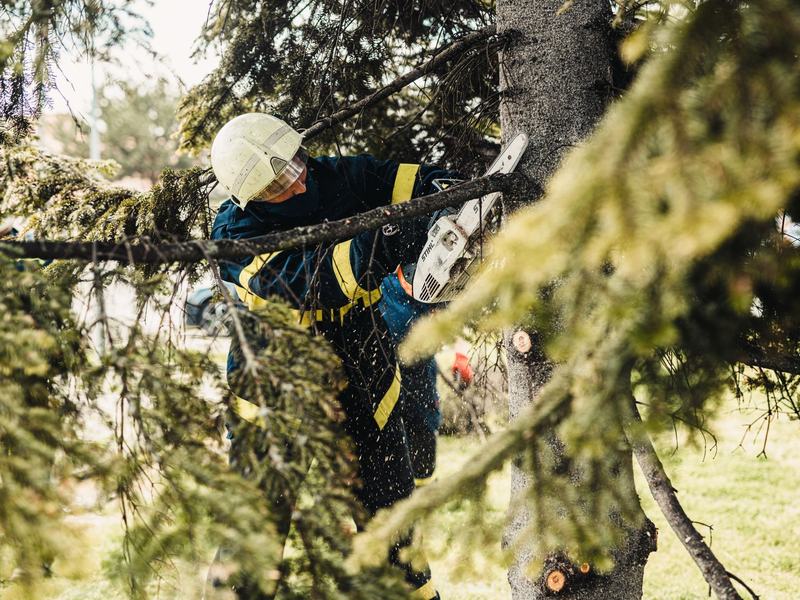
Late fall and winter are often convenient for planned tree removal in Davenport, but the safest date depends on soil, access, tree condition, and weather. Storm damage should be handled when it is safe, not delayed for a season.
For a planned removal, late fall through winter can be a good window in Davenport. Leaves are off many deciduous trees, so the crew can see the structure and nearby hazards. Frozen or firm ground can also reduce rutting in a lawn, although deep frost, snow, and ice can slow the job.
Winter is not automatically safe. Ice-covered limbs, strong wind, snow on a roof, and frozen equipment create hazards. The contractor should choose a workday with suitable weather, not simply the coldest date on the calendar.
Davenport's spring weather can bring rain, thawing soil, and muddy yards. Heavy equipment on wet ground may leave ruts, especially near the Mississippi River floodplain or low areas with poor drainage. A crew may need to wait for firmer conditions or use ground protection mats.
Spring can still be a good time for removal when a tree is unsafe or access is open. Plan for more cleanup if storms have broken branches and for a longer scheduling line after a major wind event.
Summer removal is practical, but thunderstorms, high winds, lightning, and heat can stop work. Davenport sits in the Mississippi River corridor, and storm systems can move quickly across the Quad Cities. Crews should pause for lightning and unsafe wind rather than rush a cut.
Trees with full leaves can be harder to inspect and may catch more wind. On the other hand, a summer job may be easier to schedule before peak storm demand if the tree has already been judged unsafe.
Much of the Davenport area has deep, productive soils, but urban fill, compacted clay, drainage problems, and river-bottom conditions vary from lot to lot. Roots can be shallow or restricted near sidewalks, driveways, and foundations. Ask the contractor how equipment will reach the tree without damaging soil or pavement.
A leaning, hollow, storm-split, or dead tree should not wait for winter. Have it assessed promptly, especially if it can hit a home, garage, sidewalk, street, or utility line. Season matters less than the immediate risk.
Before removal, check the tree for active bird nests and follow applicable wildlife rules. Your contractor can explain what they see, but a tree company does not replace a wildlife agency's advice. Do not disturb a bat, bird, or other animal if you are unsure what to do.
If you plan to replant, wait until the new tree has enough room for its mature canopy and roots. Call 811 before digging, and avoid placing a new tree directly under utility lines. Iowa State University Extension can help with choosing species suited to the site.
The Quad Cities has seen damaging wind and thunderstorm events, including the August 10, 2020 derecho that caused widespread damage across Iowa and the July 15, 2021 severe weather event documented by the National Weather Service in the region. Those events are reminders that a tree can look sound and still have weak limbs or root problems after repeated stress.
Check the National Weather Service Quad Cities forecast before a scheduled job. If the forecast calls for thunderstorms, high winds, or ice, ask to reschedule rather than accepting unnecessary risk.
Also in our network: Best Time for Tree Removal in Rockford, IL, Best Time for Tree Removal in Dubuque, Iowa.
Send us a few details and a photo and we will get you a free quote.
Get my free quote QUAD CITIES